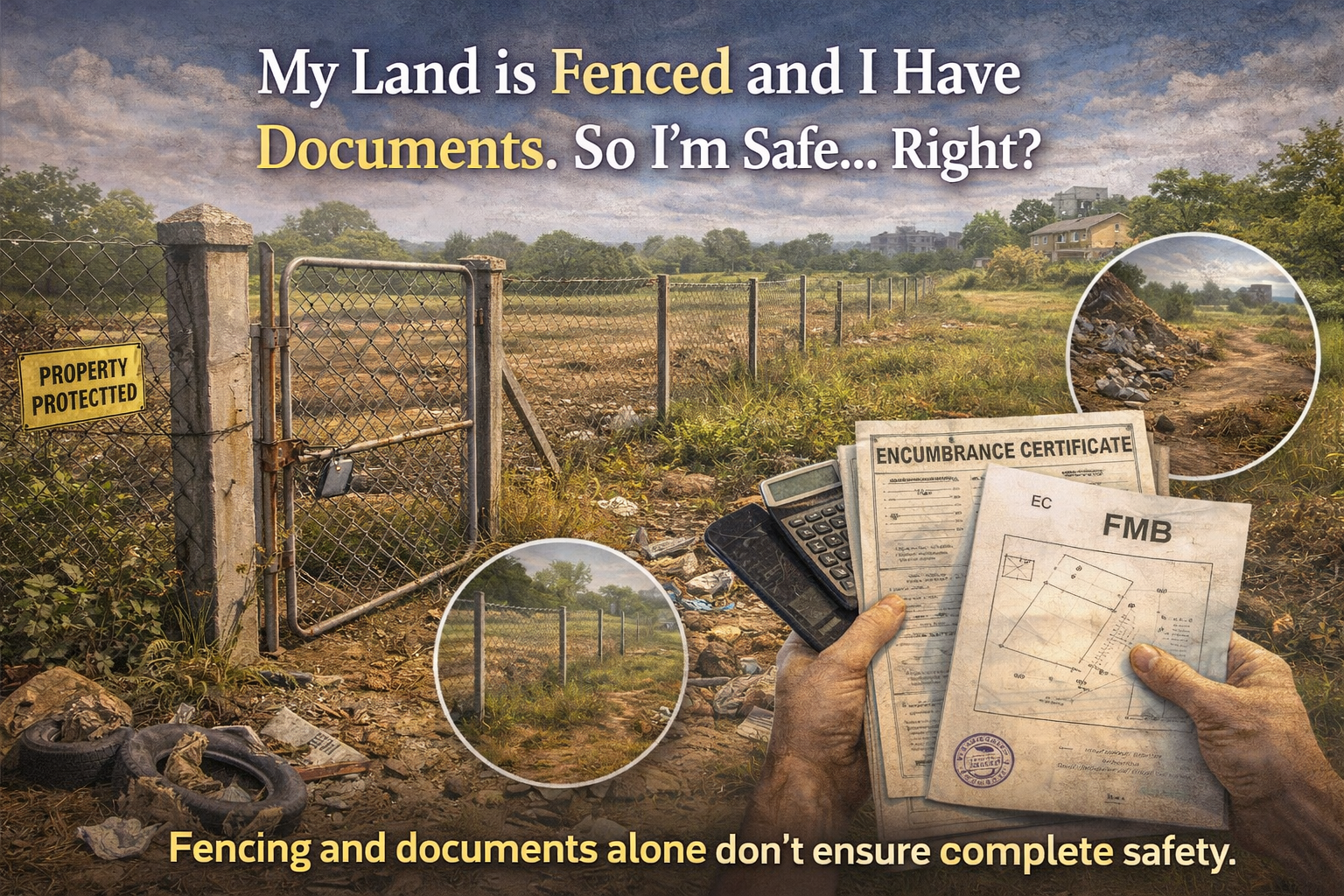
My Land is Fenced and I Have Documents. So I'm Safe… Right?
Owning land often brings a sense of security—especially when it is fenced and supported by legal documents. Many landowners believe this is enough to keep their property fully protected.
However, land ownership is not just about having documents or fencing. It requires continuous clarity—both legally and on the ground.
Fencing Is Important — But Not Permanent Protection
Fencing creates a visible boundary and is a strong first step. But over time:
- ✅ Fences may weaken due to weather and age
- ✅ Gates may become damaged or unused
- ✅ Small gaps or access points can develop
Without periodic checks, even good fencing can lose its effectiveness.
Documents Matter — But They Must Be Verified and Updated
Ownership documents are essential—but not all documents are actively reviewed after purchase. Many landowners check documents mainly during:
- ✅ Purchase
- ✅ Loan processing
- ✅ Legal transactions
After that, documents are often left unverified for years.
However, certain records play a continuous role in protecting ownership:
- ✅ Encumbrance Certificate (EC) helps track any registered transactions or claims related to the property
- ✅ FMB (Field Measurement Book) defines exact land measurements and boundary details on record
- ✅ DTCP-approved layouts must match the actual plot and surrounding development
If these are not periodically reviewed or aligned with the current ground situation, gaps can arise between records and reality.
Matching Documents with Ground Reality Is Critical
Even when documents are clear, issues can arise if:
- ✅ Physical boundaries do not match FMB sketches
- ✅ Layout changes occur around the property
- ✅ Nearby developments alter access or usage patterns
- ✅ Old approvals or layouts are not cross-verified
This is why ownership is not just about holding documents—it is about ensuring they continue to reflect the actual condition of the land.
When Land Is Left Unattended
Without regular observation, small changes can happen unnoticed:
- ✅ Clearing of vegetation
- ✅ Informal access paths forming
- ✅ Dumping or temporary usage
- ✅ Ground-level modifications
These changes may start small but can lead to larger concerns if not identified early.
A More Complete Approach to Land Safety
To truly stay protected, landowners should combine documentation + physical monitoring:
- ✅ Periodically review EC to check for any updates
- ✅ Ensure FMB boundaries match on-ground markers
- ✅ Verify DTCP/layout alignment with current surroundings
- ✅ Inspect fencing and access points
- ✅ Visit the land or arrange regular monitoring
- ✅ Maintain photographic records over time
Fencing and documents are essential—but they are not sufficient on their own.
Real land security comes from:
- ✅ Updated and verified records
- ✅ Clear boundary alignment
- ✅ Regular on-ground visibility
When both documents and physical condition are aligned, landowners can hold their property with greater confidence and clarity.
At Nilam Insights Pvt Ltd, the focus is on bridging this gap—combining on-ground monitoring with clear reporting so landowners stay informed at all times.