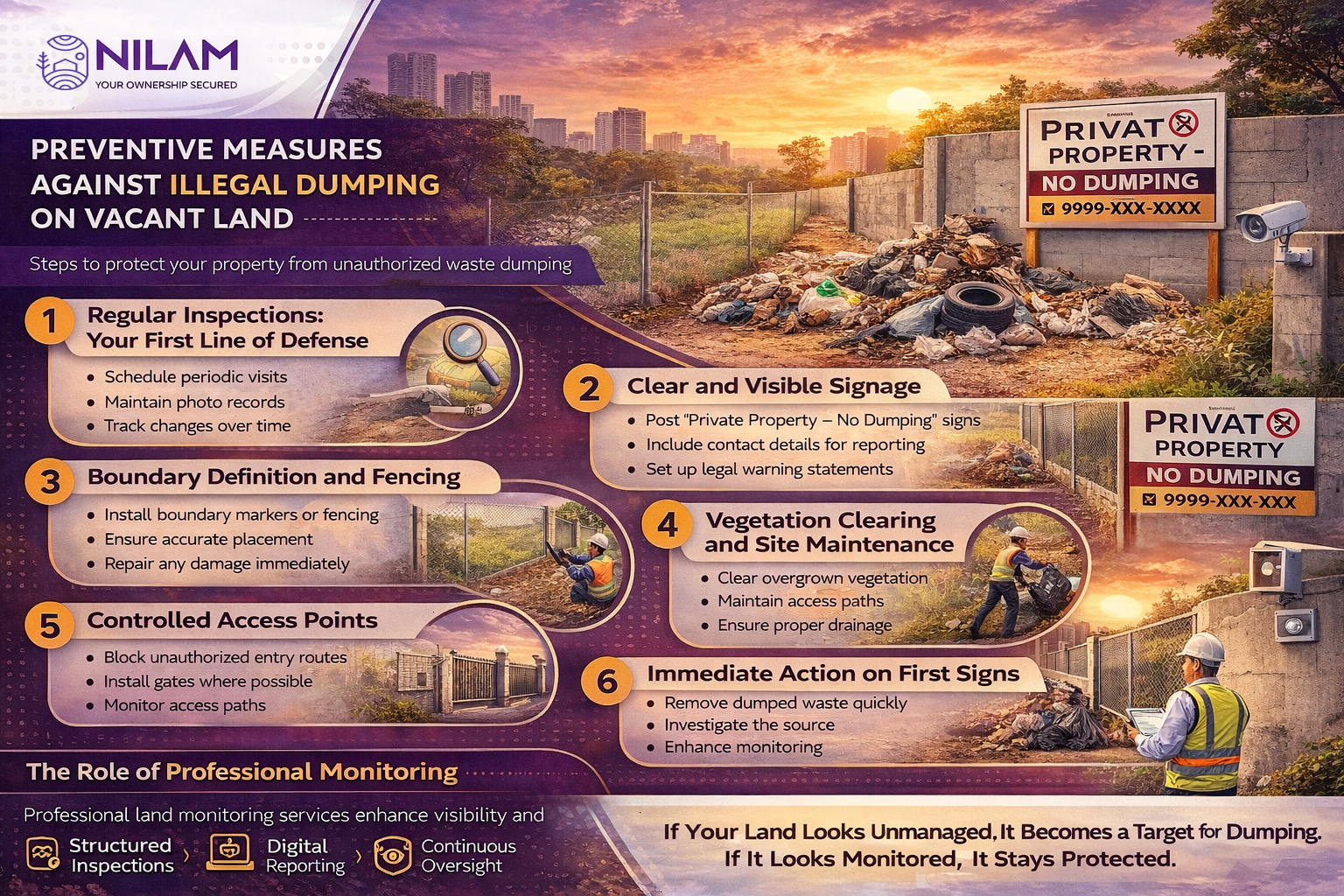
Preventive Measures Against Illegal Dumping on Vacant Land
Illegal dumping is one of the most common and damaging issues faced by vacant landowners. What starts as a few bags of waste or construction debris can quickly escalate into large-scale dumping, leading to environmental damage, legal complications and a decline in property value.
For landowners, especially those who are not physically present, taking preventive action is not optional. It is essential.
Why Illegal Dumping Happens
Vacant land is often targeted because it appears unmonitored and unprotected. A lack of physical boundaries, unclear ownership visibility and overgrown vegetation create the perfect conditions for misuse.
Once dumping begins, it sends a signal that the land is available, encouraging repeated violations.
Key Preventive Measures
1. Regular Inspections: Your First Line of Defense
Consistent site visits play a critical role in preventing illegal dumping. When land is visibly monitored, it discourages misuse.
- Schedule periodic physical inspections
- Maintain geo-tagged photo records
- Track changes over time
Frequent monitoring ensures that even minor dumping activities are identified and addressed before they grow into major problems.
2. Clear and Visible Signage
Signboards act as a psychological and legal deterrent. They communicate ownership and warn against unauthorized activities.
Effective signage should include:
- Private Property - No Dumping notices
- Contact details for reporting violations
- Legal warning statements
Strategically placing signage at entry points and boundaries increases visibility and reduces the likelihood of illegal activity.
3. Boundary Definition and Fencing
Clearly defined boundaries eliminate ambiguity. When land is open and unmarked, it invites misuse.
- Install fencing or boundary markers
- Ensure accurate placement based on survey data
- Repair damaged sections immediately
A well-secured boundary signals active ownership and control.
4. Vegetation Clearing and Site Maintenance
Overgrown land provides cover for illegal dumping. Maintaining a clean site improves visibility and reduces hidden access points.
- Clear bushes and unwanted vegetation
- Maintain access paths
- Ensure proper drainage to avoid waste accumulation
A well-maintained property naturally discourages misuse.
5. Controlled Access Points
Limiting entry to your land is a highly effective preventive strategy.
- Block unauthorized entry routes
- Install gates where possible
- Monitor access paths regularly
Reducing accessibility significantly lowers the chances of dumping.
6. Immediate Action on First Signs
The biggest mistake landowners make is ignoring small incidents. Early action prevents escalation.
- Remove dumped waste quickly
- Investigate the source if possible
- Reinforce monitoring and signage
A prompt response sends a clear message that the land is actively managed.
The Role of Professional Monitoring
Managing all these measures remotely can be challenging. This is where professional land monitoring services become essential.
With structured inspections, digital reporting and continuous oversight, landowners gain visibility and control without needing to be physically present. Preventive action becomes systematic rather than reactive.
Conclusion
Illegal dumping is not just a nuisance. It is a risk to your land’s value, usability and legal standing. The key to prevention lies in visibility, consistency and control.
If your land looks unattended, it becomes vulnerable. If it looks managed, it stays protected.