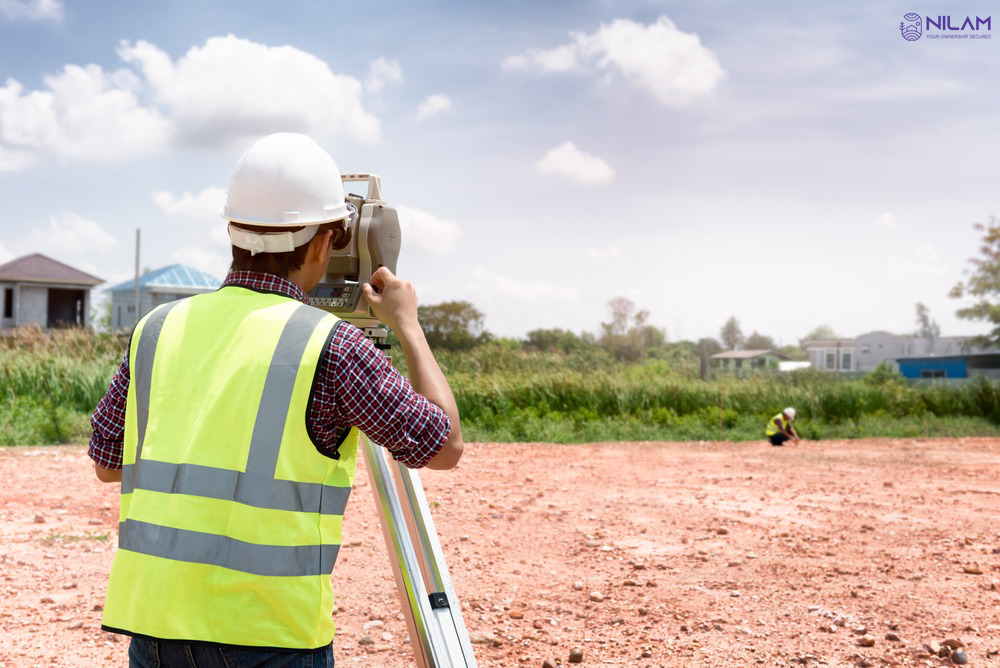
Survey, Surveillance, Monitoring
Land ownership involves various technical processes, legal formalities, compliance requirements, and ongoing protective measures. For most landowners, it is neither practical nor necessary to handle every technical activity personally.
Fortunately, there are professional organizations, such as Nilam Insights, covering the entire process, beginning with accurate land measurement conducted by licensed surveyors, beyond measurement, we implement state-of-the-art surveillance systems designed to provide real-time insights and enhanced site security. Leveraging innovative tools and data-driven approaches, we ensure efficiency, transparency, and operational excellence. — allowing you to enjoy peace of mind without being overwhelmed by procedures and documentation.
Key Steps in Land Protection
Protecting land requires several structured steps. Among them, the most crucial are:
- ✅ Survey
- ✅ Surveillance
- ✅ Monitoring
Though these terms may sound similar, they have distinct meanings in land protection parlance and must be clearly understood.
Survey:
A survey in land management refers to the measurement and mapping of land boundaries, features, and ownership details
Land surveys are conducted by licensed surveyors using tools such as GPS, total stations, drones, and Geographic Information Systems (GIS). Surveys are essential for:
- ✅ Determining property boundaries
- ✅ Preparing land titles and deeds
- ✅ Subdividing land
- ✅ Supporting land transactions
- ✅ Planning construction projects
Surveillance:
Surveillance refers to the continuous observation of land and property to detect unauthorized activities, encroachments, illegal construction, or land use changes.
In modern land management, surveillance often uses technologies such as:
- ✅ Satellite imagery
- ✅ Drones
- ✅ CCTV systems
- ✅ Remote sensing
- ✅ GIS mapping systems
Monitoring:
Monitoring involves regularly tracking land use, property development, and management activities to ensure they align with policies, plans, and regulations. This subject has been discussed in detail in our previous blog publications, where we have explored its significance, methodologies, and practical applications in land ownership and management.