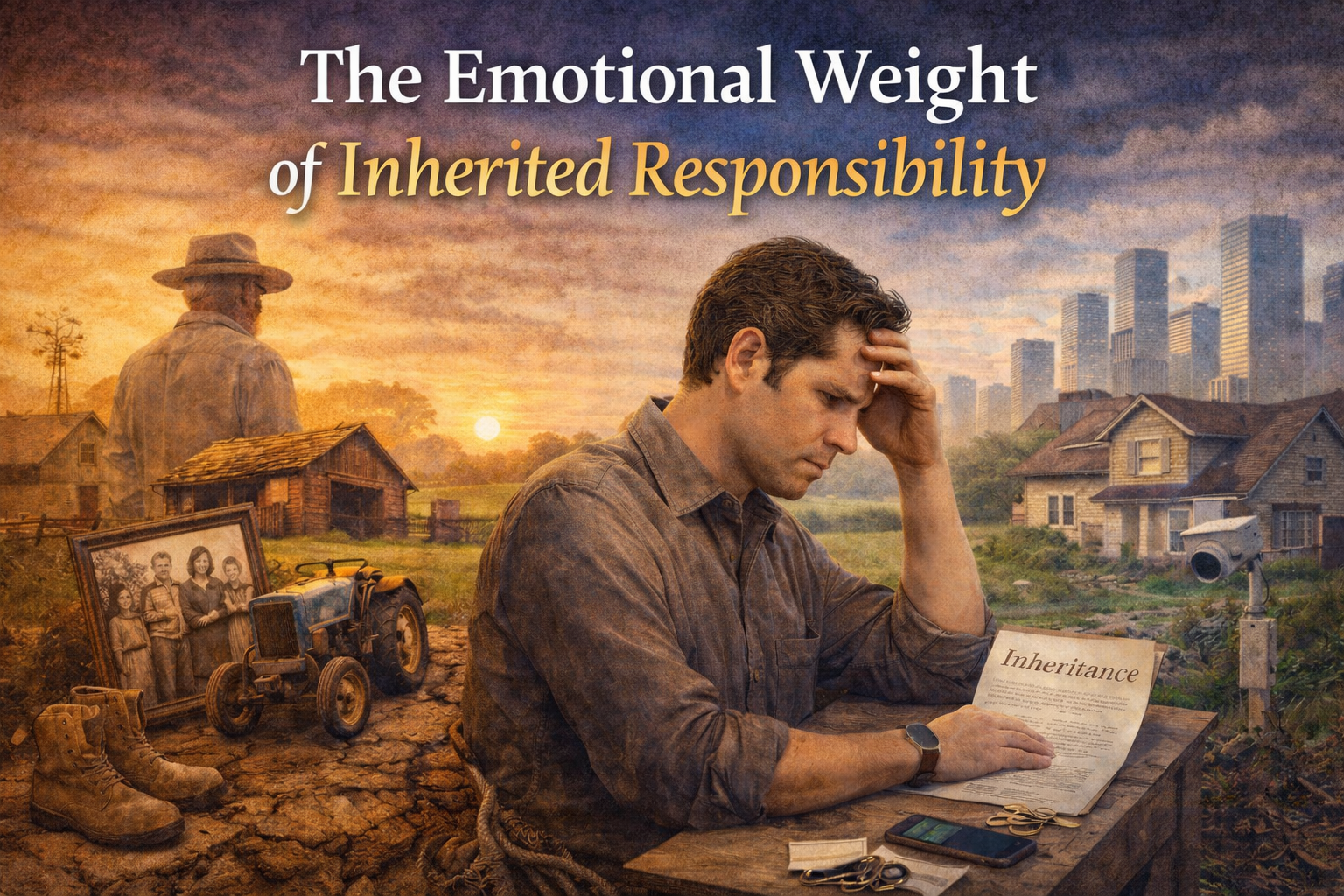
The Emotional Weight of Inherited Responsibility
The emotional weight of inherited land is rarely about the soil itself—it's about everything layered into it: memory, identity, duty, and expectation.
When land passes from one generation to another, it carries stories. It might hold the hard work and dedication of grandparents, the sacrifices made to keep it, or even conflicts that shaped a family. Because of this, inheriting land often feels less like receiving property and more like becoming a steward of a legacy.
That sense of responsibility can be both grounding and heavy.
On one hand, inherited land can create a deep connection to roots. It offers continuity in a fast-changing world—a place that says, you belong somewhere specific. This can bring pride, stability, and even purpose. Many people feel a quiet obligation to "honour" those who came before them by preserving or maintaining the land.
On the other hand, that same obligation can feel like pressure. Questions start to surface:
- ✅ Am I doing justice to what was given to me?
- ✅ What if I want a different life than the one this land represents?
- ✅ Is it wrong to sell, change, or leave it unused?
This tension is where the emotional weight really sits—between inheritance as a gift and inheritance as a responsibility.
There's also a subtle psychological layer: inherited land can tie identity to the past. It can make people feel anchored, but sometimes also stuck. Especially if the land represents a way of life (like farming, rural living, or family traditions) that doesn't align with one's current aspirations.
Responsibility doesn't have to mean preservation in the strict sense. It can also mean thoughtful decision-making:
- ✅ Understanding the land's history
- ✅ Acknowledging its emotional value
- ✅ And then choosing a path—whether that's maintaining or transforming
In that way, responsibility becomes less about replicating the past and more about respecting it while allowing yourself agency in the present.
Responsibility Doesn't Have to Mean Doing Everything Yourself
Traditionally, responsibility toward inherited land meant personal involvement—visiting regularly, managing disputes, maintaining boundaries. But modern life often makes that unrealistic.
Outsourcing to a professional service provider doesn't mean neglect. In many cases, it's actually a more responsible choice, because it ensures:
- ✅ Consistent monitoring
- ✅ Proper documentation
- ✅ Preventive maintenance
- ✅ Protection from encroachment or misuse
In other words, you move from being a "burdened owner" to a "thoughtful owner".
What Professional Land Management Actually Does
Services like Nilam Insights offer structured care that mirrors what a deeply involved family member might have done in the past, while also incorporating modern technologies and systematic approaches to land maintenance.
The Emotional Shift: From Guilt to Clarity
One of the biggest hidden benefits is psychological.
Without proper management, inherited land can quietly become a source of anxiety:
- ✅ "I haven't visited in months…"
- ✅ "What if someone has occupied it?"
- ✅ "I'm not doing enough…"
Professional care changes that narrative. It allows you to:
- ✅ Stay informed without being overwhelmed
- ✅ Make decisions from a place of clarity rather than urgency
- ✅ Reduce guilt tied to distance or lifestyle choices
Redefining "Honouring the Legacy"
There's a powerful shift here: honouring inherited land doesn't have to mean personally maintaining it the way previous generations did.
Instead, it can mean:
- ✅ Ensuring it is protected by adopting modern technologies
- ✅ Making conscious, well-informed decisions about its future
- ✅ Preserving its value—emotional, cultural, or financial
Using a service like Nilam Insights can actually be seen as adapting tradition to modern reality, rather than abandoning it.
A Balanced Way Forward
Inherited land sits at the intersection of past and present. Professional management provides a bridge between the two:
- ✅ It respects the legacy
- ✅ While acknowledging your current life constraints
So, responsibility evolves from physical presence to informed oversight.