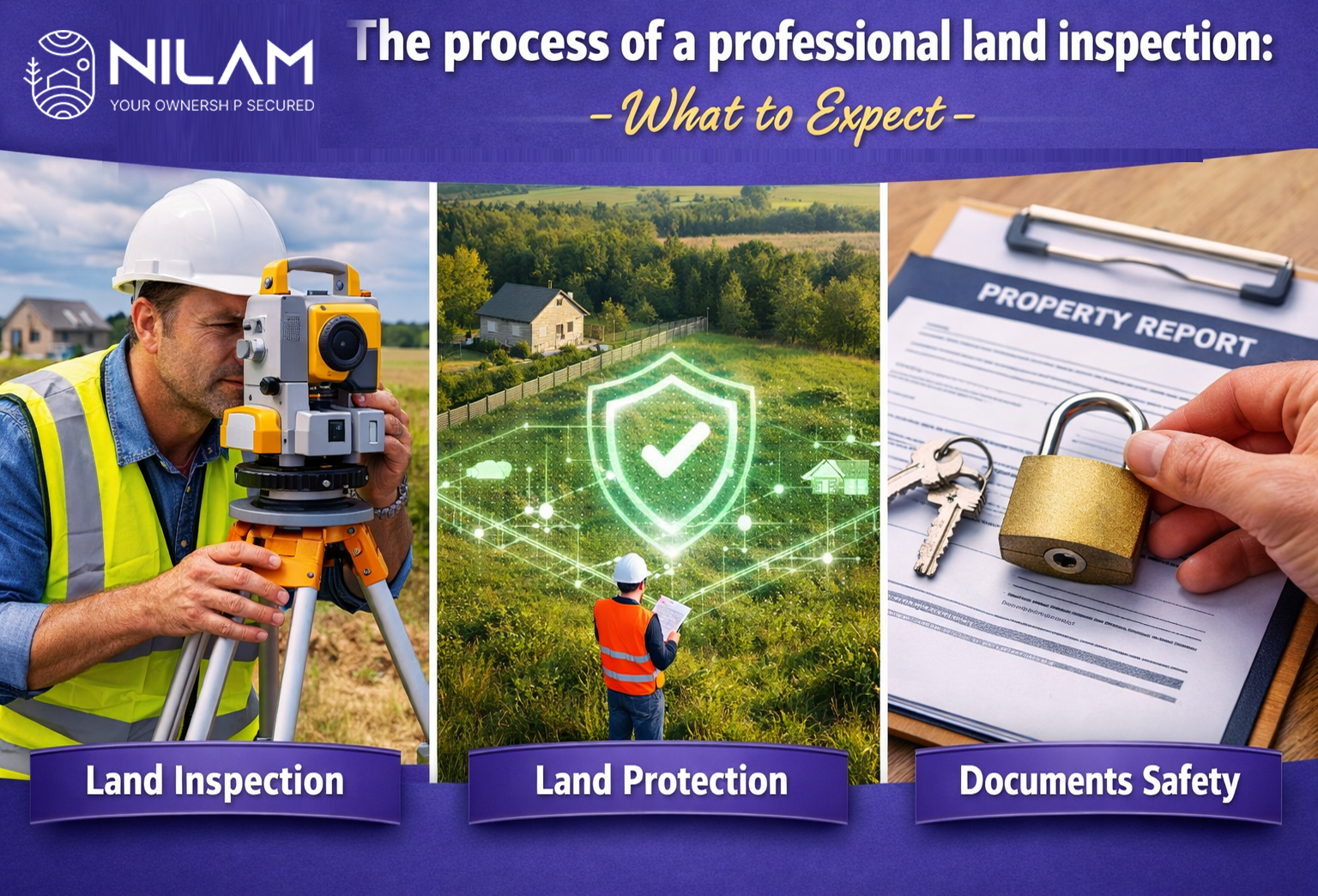
The Process of a Professional Land Inspection: What to Expect
A professional land inspection is a systematic evaluation carried out to understand the condition, safety, environmental factors, and long-term sustainability of a land property.
It is an important step in land protection because it helps owners understand the actual status of their property and take preventive action before issues become costly.
A proper inspection also supports documents safety by ensuring that all important land-related records are reviewed carefully as part of the process.
Below is a step by step description of Nilam’s physical land inspection service and what you can expect during the process.
1. Initial Consultation & Property Review
The process usually begins with an initial consultation and property review.
This stage helps create clarity between the landowner and Nilam Insights before the physical inspection begins.
It typically includes:
- ✅ Client consultation to discuss your goals such as maintenance, development, conservation and compliance
- ✅ Scope of work definition to ensure clear expectations and alignment on the inspection objectives
- ✅ Service agreement with a mutually agreed and signed contract that explains the scope and limitations of Nilam Insights, owner responsibilities, and safety and document handover protocols
- ✅ Document review covering available land surveys, zoning records, previous inspection reports, and environmental documents
This first step is very important because it sets the foundation for a smooth and professional land inspection process.
It also helps maintain documents safety by ensuring document handling is done in a controlled and transparent manner.
2. On-Site Physical Inspection
The on-site physical inspection is the core part of the process.
During this stage, Nilam Insights visits the property and performs a thorough field inspection.
The inspection includes assessment of:
- ✅ Soil condition
- ✅ Drainage and water management
- ✅ Erosion and land stability
- ✅ Vegetation
- ✅ Infrastructure and nearby development
- ✅ Encroachment verification and boundary clarification
- ✅ Environmental and regulatory compliance review
- ✅ Risk assessment and problem identification
Any other issue specific to the property and its surrounding area is also taken into consideration during the inspection.
This stage plays a major role in land protection because it identifies physical risks, possible encroachment, and early warning signs that may affect ownership, safety, or land value.
3. Detailed Inspection Report
After the site visit, a detailed inspection report is prepared.
This report is comprehensive and provides clear information about every important aspect of the land that was inspected.
The report generally includes:
- ✅ Photographic documentation
- ✅ Maps and diagrams
- ✅ Risk analysis summary
- ✅ Recommended corrective actions
- ✅ Estimated timelines for maintenance
- ✅ Plans for long term protection
The report helps landowners make informed decisions and plan the next steps with confidence.
It also becomes a useful reference for future monitoring, compliance needs, and documents safety.
Why Professional Land Inspection Matters
A professional land inspection is more than a routine visit.
It is a strategic evaluation of land health, environmental compliance, and long-term protection.
When done properly, it helps prevent costly damage, supports regulatory compliance, and promotes sustainable land use.
It also strengthens land protection by giving property owners a clear view of the current condition of their land and the risks that need attention.
At the same time, proper review and handling of records improves documents safety and reduces the chance of confusion or disputes later.
Final Words
If you want to protect your land properly, a structured and professional inspection is a smart step.
From consultation and document review to physical verification and detailed reporting, each stage has a clear purpose.
With the right inspection process, landowners can improve safety, protect documents, reduce risk, and plan for long-term land protection with confidence.